.avif)
.png)
.webp)

Fully compliant. Funds settle into your Client Account without delay, strictly adhering to MEAS Standard 9.
Funds are never commingled. They are processed securely by CHIP and reconciled into your account by the next business day.


Zero transaction fees. Buyers pay the exact deposit amount, and agencies pay nothing to receive it.
We partner with Bank Negara registered payment gateway (CHIP IN Sdn Bhd) to ensure competitive rates, rapid settlement times, and direct local support.


Agencies are reporting institutions. We automate your specific compliance obligations under the AMLA 2001 Act.
Streamlined process. You only need to upload the OTP/OTR to link the deposit; no duplicate document uploads required.

Your commissions are untouched. We monetise downstream valuation leads via ValuationXchange and bank partners.
You stay in control. We identify risks, but your agency decides whether to proceed or refund based on your internal SOPs.


Audit-ready clarity. Bank statements clearly show "CHIP" transfers, supported by downloadable reconciliation reports.
FPX is standard. Credit card payment options for international clients are scheduled for release in Q1 2026.

Be part of the movement for transparent,
tech-enabled valuation in Malaysia.



Insights from the 18th Malaysian Property Summit
Here’s one of the key things shared at the 18th Malaysian Property Summit, organised by PEPS: https://www.peps.org.my/event/18th-malaysian-property-summit-2026-18mps/
Malaysia’s residential property market may look healthy on the surface, but the way it is being sustained today raises important questions about where the cycle is heading next.
By conventional indicators, Malaysia’s residential property market appears stable. Annual transaction volumes continue to hover between 300,000 and 400,000 units, while total transaction values remain on an upward trajectory. These figures suggest a market that is active, liquid, and resilient.
However, as highlighted during the summit, headline numbers alone no longer tell the full story. Beneath the surface, the mechanics driving this activity have shifted in important ways.
One of the key observations shared during the sessions was that Malaysia’s housing market is no longer driven primarily by purchasing power. Instead, it is increasingly propelled by debt.
Over the past two decades, more than 90% of residential property value has been financed. While non-performing loan (NPL) levels remain relatively low at under 2%, this still represents billions of ringgit in stressed loans each year. A growing share of these loans is linked to overexposure - a sign that leverage, rather than income growth, is sustaining demand.
This helps explain why property prices have continued to rise faster than wages. Malaysia’s price-to-income ratio has increased from around 8.3 in 2004 to approximately 11.1 in 2024. While this may appear comparable to some developed markets, Malaysia’s income base is significantly lower, and household debt levels are considerably higher.
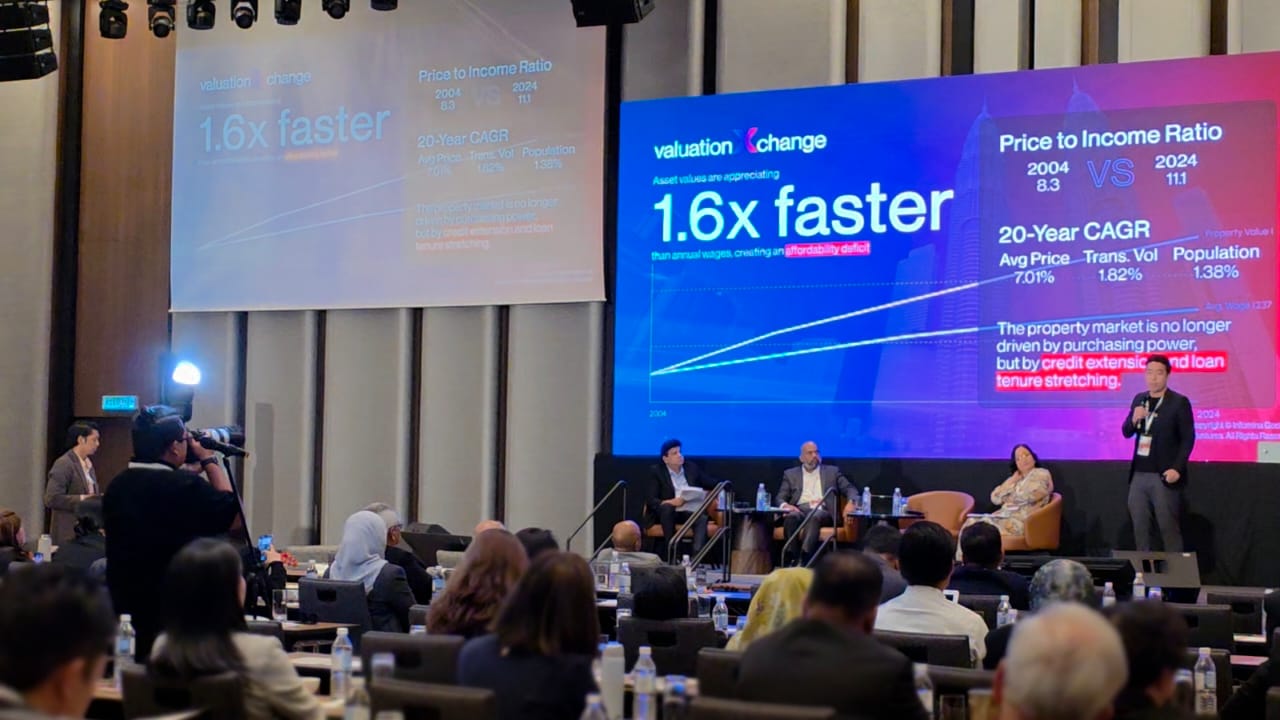
To manage rising prices, buyers have increasingly relied on longer loan tenures and higher financing margins to keep monthly repayments manageable. One notable outcome of this trend is the growing prevalence of mark-up loans, particularly in the residential subsale market.
These arrangements, which involve inflating transaction values to secure higher loan amounts, may offer short-term relief for buyers. However, they also embed higher prices into the system, pushing leverage up and distorting price signals. Rather than solving affordability, such mechanisms risk making the underlying problem worse over time.
As leverage increases, risk does not remain confined to borrowers. During the panel discussion, it was noted that as more highly leveraged loans turn stressed, the effects ripple across the industry.
Valuers face higher exposure to professional indemnity claims. Insurers respond by raising premiums. Transaction costs rise, and these additional costs are ultimately borne by consumers. What begins as an attempt to make housing “more affordable” through financing becomes a snowball effect that increases costs across the entire property transaction chain.
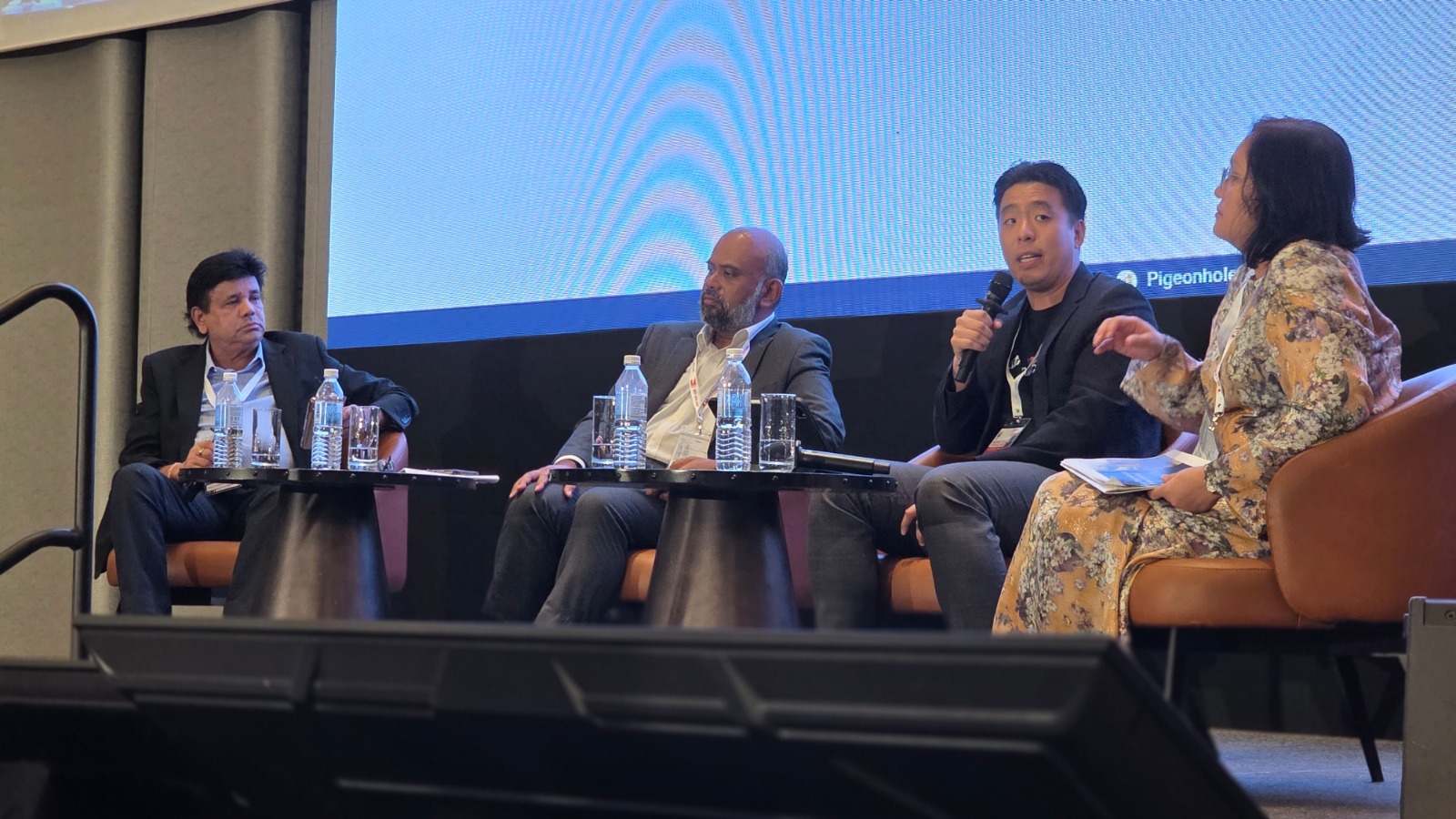
Research shared at the summit also highlighted that housing affordability challenges extend beyond homeownership. Despite Malaysia’s relatively high homeownership rate, housing remains “seriously unaffordable” by international benchmarks.
Supply is skewed toward higher-income households, while a significant portion of homes priced below RM300,000 remain out of reach for the segments they are intended to serve. At the same time, renting is becoming less viable as a fallback option, particularly in urban areas where even the lowest rents exceed what minimum-wage earners can sustainably afford.
Taken together, these insights suggest that Malaysia’s residential market is not overheating in a traditional boom-and-bust sense. Instead, the cycle is being extended through financial engineering - longer tenures, higher leverage, and increasingly complex transaction structures.
Rather than prices adjusting to reflect underlying purchasing power, stability is being maintained by shifting costs and risks into the future. The danger is not necessarily a sudden correction, but a gradual accumulation of friction: longer time on market, wider gaps between asking and clearing prices, rising foreclosures, and increasing pressure on industry professionals.
As the residential market moves into its next phase, transparency and discipline across the transaction chain become critical. Clear information around pricing, valuation, and financing is essential to ensure that short-term affordability solutions do not create long-term distortions.
To learn how ValuationXchange helps bring clarity that builds trust across property transactions, visit valuationxchange.com/about-us.


Ready to Elevate Trust in Property Valuation?Join the #TransformationTribe and discover how ValuationXchange empowers smarter lending through trusted, tamper-proof, and transparent valuation workflows.
Reach out to our team to explore how we can support your valuation, compliance, or risk management transformation.
.avif)



.png)
.png)