


Fully compliant. Funds settle into your Client Account without delay, strictly adhering to MEAS Standard 9.
Funds are never commingled. They are processed securely by CHIP and reconciled into your account by the next business day.


Zero transaction fees. Buyers pay the exact deposit amount, and agencies pay nothing to receive it.
We partner with Bank Negara registered payment gateway (CHIP IN Sdn Bhd) to ensure competitive rates, rapid settlement times, and direct local support.


Agencies are reporting institutions. We automate your specific compliance obligations under the AMLA 2001 Act.
Streamlined process. You only need to upload the OTP/OTR to link the deposit; no duplicate document uploads required.

Your commissions are untouched. We monetise downstream valuation leads via ValuationXchange and bank partners.
You stay in control. We identify risks, but your agency decides whether to proceed or refund based on your internal SOPs.


Audit-ready clarity. Bank statements clearly show "CHIP" transfers, supported by downloadable reconciliation reports.
FPX is standard. Credit card payment options for international clients are scheduled for release in Q1 2026.

Be part of the movement for transparent,
tech-enabled valuation in Malaysia.



Discussions around Sarawak’s property outlook took centre stage at MAREC 2026, where industry stakeholders gathered to exchange perspectives on market direction and emerging opportunities. Among the speakers was Colin Wong Yek Fong of Affluence Properties, who presented a view of the sector shaped by broader economic positioning, evolving demand patterns and recent development trends.
His session drew attention to how Sarawak’s longer-term economic strategies could influence property activity over time. The presentation referenced structural initiatives such as fiscal planning efforts, investment-readiness measures and financing ecosystem developments - all of which form part of the wider backdrop against which real estate decisions are being made. Rather than focusing solely on short-term market performance, the discussion pointed towards how these underlying factors may shape future momentum.
From a development standpoint, the slides highlighted changing dynamics in the residential segment. Urban high-rise projects have been seeing renewed attention in recent years, while suburban landed properties continue to attract interest from buyers seeking lifestyle value and affordability. This combination reflects a market responding to different needs across demographic groups, rather than moving in a single direction.
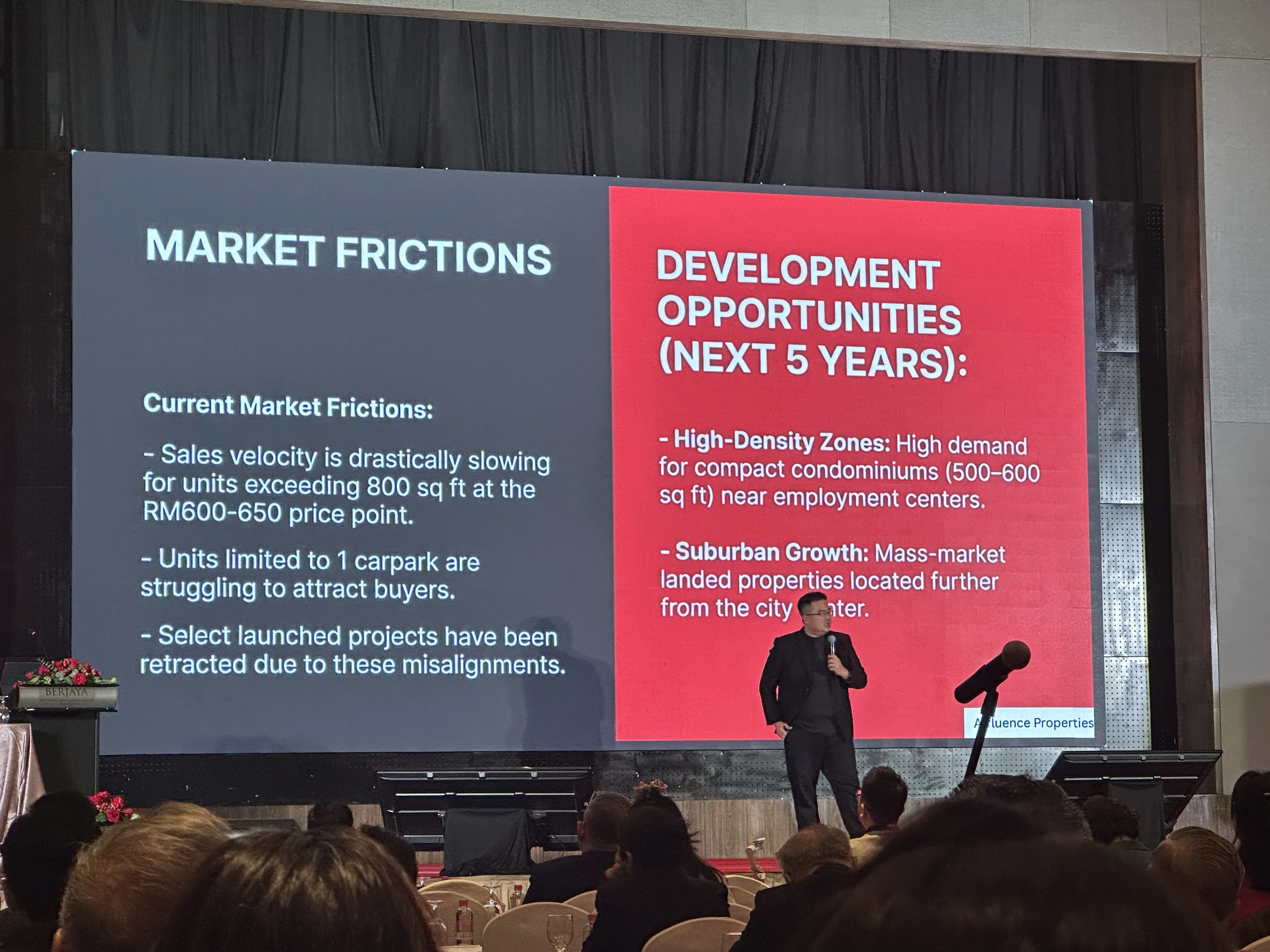
Another area of focus was the growing relevance of more compact residential units. Homes in the range of roughly 500 to 600 square feet were identified as gaining traction, particularly among first-time buyers and investors looking for accessible entry points. Pricing considerations and proximity to employment hubs appear to be key factors influencing this trend, suggesting that future project positioning may increasingly revolve around practicality and connectivity.
Taken together, these observations point to a property landscape that may be gradually adjusting to new market realities. While transaction activity has moved at a measured pace in recent years, shifts in product strategy and development pipelines indicate that stakeholders are actively preparing for potential changes in demand conditions.
Beyond supply and demand considerations, the session also underscored the broader ecosystem that supports property transactions. As market activity evolves, coordination between developers, agents, valuers and financial institutions becomes more critical. The operational side of the industry, from documentation workflows to payment processes, often plays a role in determining how efficiently deals progress from launch to completion.
These themes were echoed on the exhibition floor at MAREC, where companies involved in different parts of the property value chain engaged attendees on practical industry challenges. As an exhibitor at the event, the PaymentXchange team spoke with property professionals who shared experiences around managing payment coordination across multiple stakeholders. Issues such as tracking transaction progress and ensuring clarity in financial workflows were recurring points of discussion.
In periods of lower activity, such challenges can sometimes remain manageable. However, when development momentum begins to shift, operational clarity tends to become more important. Buyers, investors and financing institutions increasingly expect transparency and efficiency in the way transactions are handled, particularly as project timelines become tighter and market expectations evolve.
Looking ahead, Sarawak’s property market will likely continue to be shaped by a mix of economic direction, product positioning and stakeholder readiness. Developers may refine offerings in response to emerging demand signals, while industry players across the ecosystem consider how processes and infrastructure can better support transaction execution.
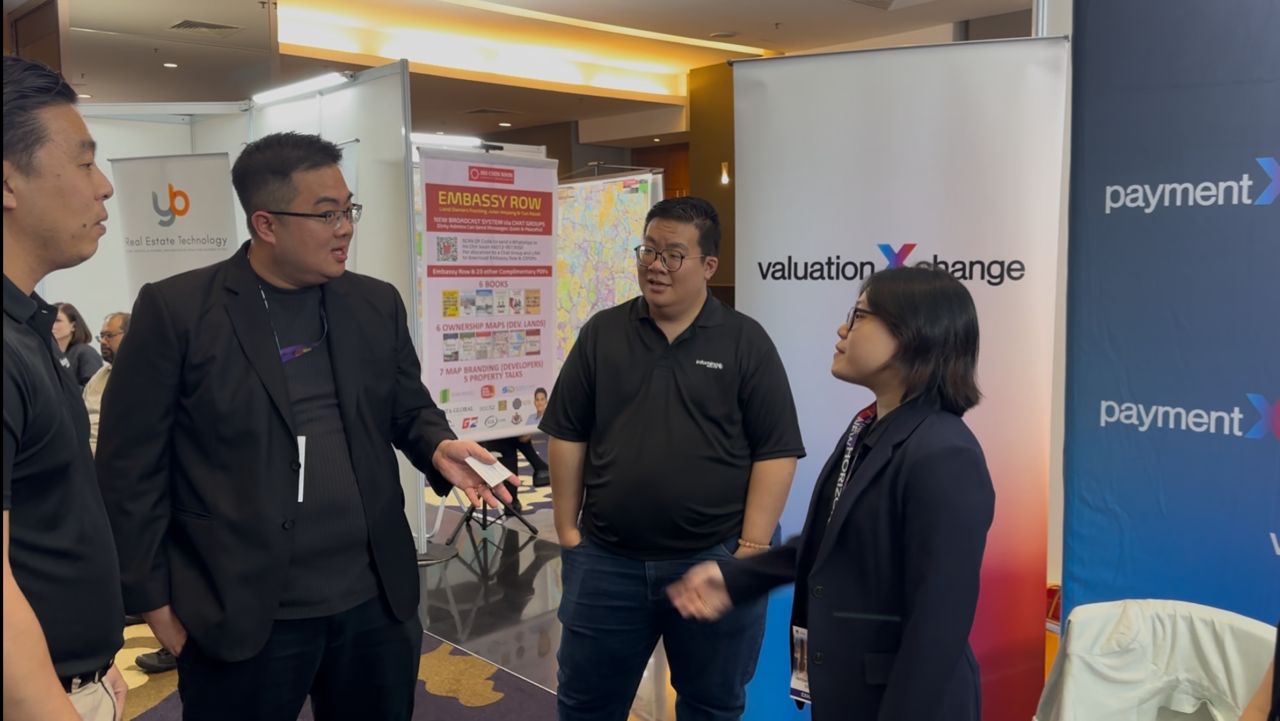
As Sarawak’s property market evolves and transaction activity potentially increases, industry stakeholders may wish to explore how digital payment infrastructure such as PaymentXchange can support clearer coordination and greater transparency in property transaction workflows. Learn more about how PaymentXchange fits into the real estate ecosystem by connecting with our team.


Ready to Elevate Trust in Property Valuation?Join the #TransformationTribe and discover how ValuationXchange empowers smarter lending through trusted, tamper-proof, and transparent valuation workflows.
Reach out to our team to explore how we can support your valuation, compliance, or risk management transformation.